Protecting species and their habitats also means sharing knowledge to help everyone better understand and preserve their environment.
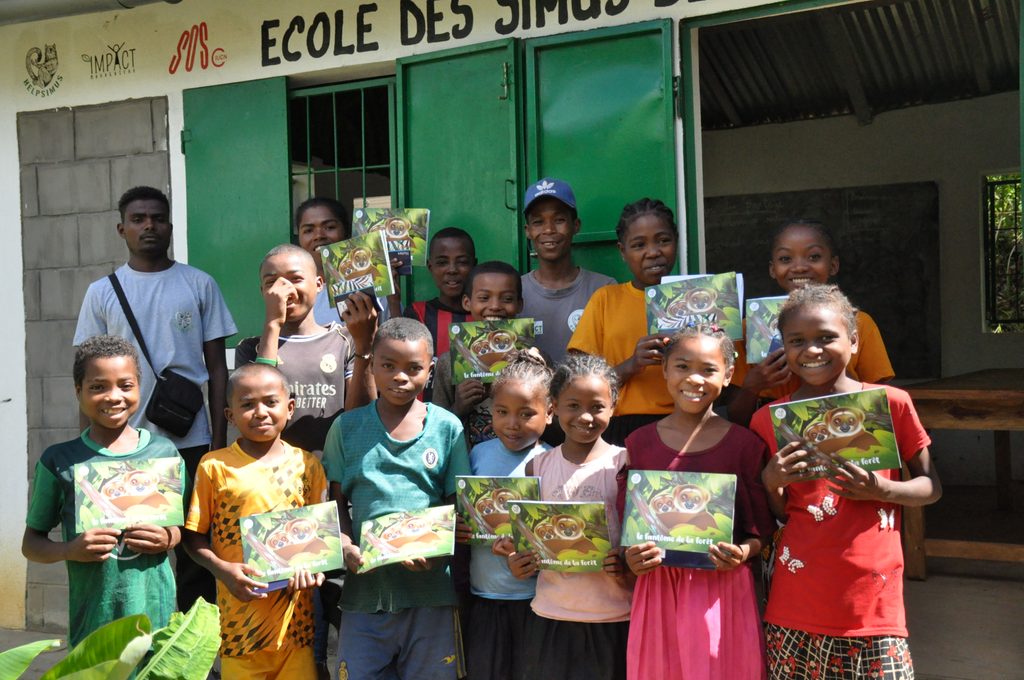
We carry out this work particularly with children, through environmental education workshops held at the two Écoles des Simus and five primary schools. The program includes presentations, games, songs, drawings, and reading activities that allow children to discover their environment and learn while having fun.
During school holidays, environmental education camps are also organized in the Bamboo Lemur program area and, for students who have passed the CEPE (Certificate of Primary Education), at Ranomafana National Park. These two- to three-day trips give children the opportunity to explore the forest and discover the species that live there.
In June 2025, the recruitment of Florida, a second environmental educator, strengthened the team and enabled these activities to expand. From January 2025 to June 2026, 491 workshops were held, with a total of 8,091 child participations. Over the same period, 19 environmental education camps welcomed 180 children.
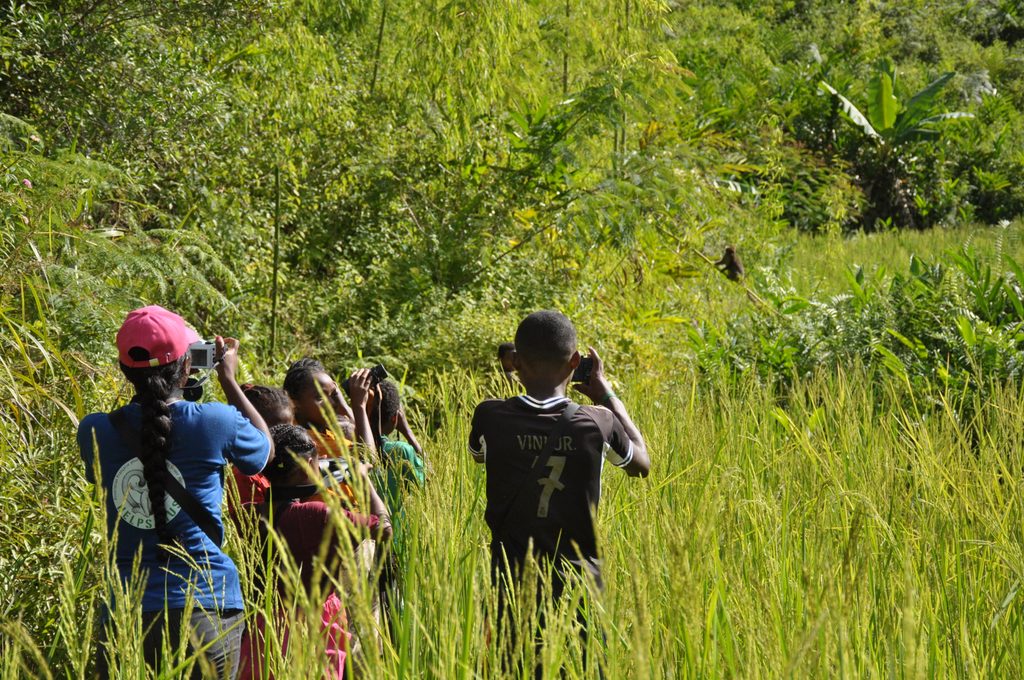
Since July 2025, the arrival of Augustin, a third environmental educator, has also enabled us to resume forest outings with residents of our partner villages. He guides participants in observing lemurs and discovering local wildlife and plant life, while raising awareness of the role of forests and the threats facing species. From January 2025 to June 2026, nine forest outings brought together 46 participants.
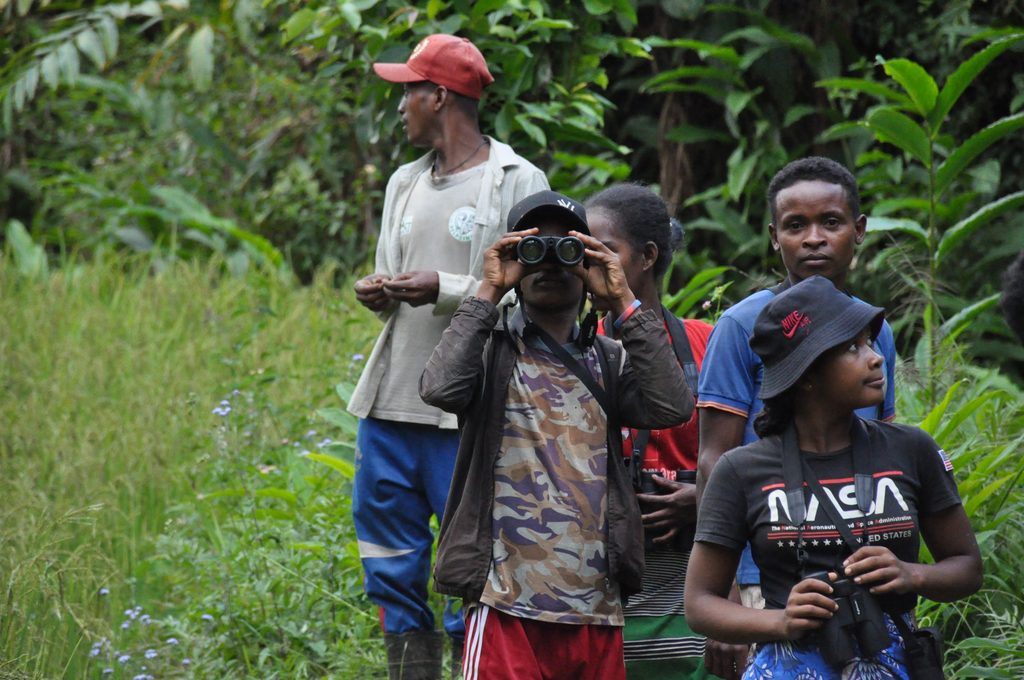
Our three environmental educators encourage both children and adults to share what they learn with those around them and, in turn, become ambassadors for knowledge-sharing.
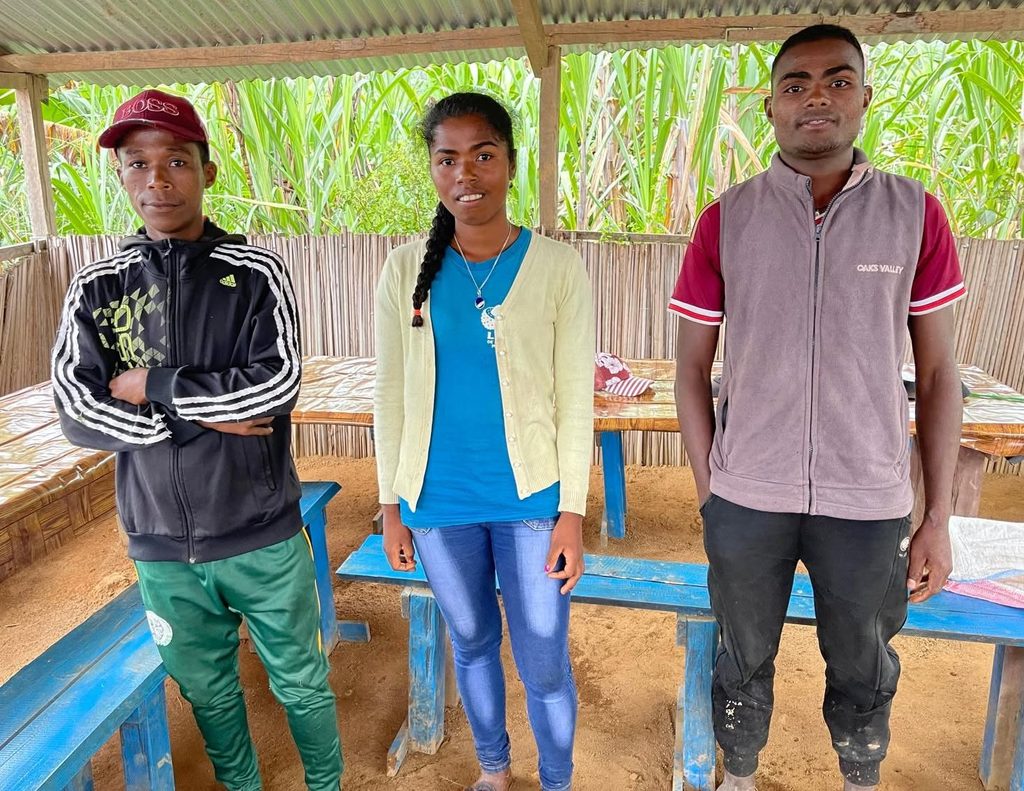
From left to right : Laurent, Florida, Augustin – D. Roullet
In April 2026, two study trips were also organized for 33 students from the University of Antananarivo (23 women and 10 men), accompanied by two of their professors. Over three days, the students discovered our improved rice cultivation (SRA) and rice-field guarding programs, learned how to use camera traps, observed and identified lemurs, and took part in forest restoration by planting 1,000 seedlings.
These trips give students a practical introduction to conservation professions and the different approaches to conservation. Two students were subsequently selected to undertake a two-month internship in Sahofika, focusing on the red-bellied lemur. They observed a subadult female born in 2023 within a group of five individuals, with the aim of better understanding the dispersal process of juveniles in this species.
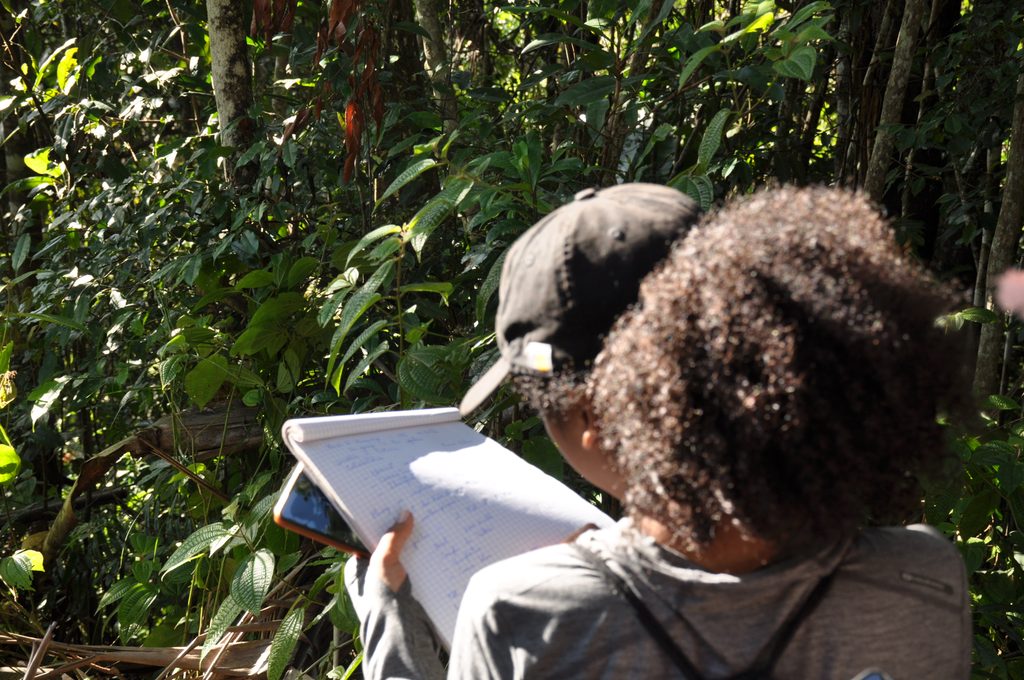
Through all these initiatives, Helpsimus places knowledge-sharing at the heart of its work with children, adults, and students. By giving everyone the tools to better understand their environment, these activities encourage knowledge-sharing, engagement, and participation in efforts to protect lemurs and their habitat.
Technical partner: IMPACT Madagascar.
These activities are supported in part by the IUCN’s Save Our Species program.
Other partners: Palmyre Conservation; Fondation Audemars Piguet pour les Arbres.
Become a member
Join whose who care deeply about greater bamboo lemur conservation. Become a member of Helpsimus and help protecting greater bamboo lemurs in Madagascar as well as providing support for the people who live close to their home range.
Annual Fee:
Friendly member: €20 (+€10 with an animal adoption)
Friendly family member: €30 (+€10 with an animal adoption)
Help us
If you would just like to support us, you can make a donation here:
Last news
Contact :
contact@helpsimus.org